FCS Expands Global Impact in Gastrointestinal Cancer Research

Florida Cancer Specialists & Research Institute Expands Global Impact in Gastrointestinal Cancer Research
Collaborative Research Efforts Advance Treatment Strategies for GI Cancers
Fort Myers, Fla., January 8, 2026 – Florida Cancer Specialists & Research Institute, LLC (FCS) advances gastrointestinal cancer treatment through participation at the global ASCO® 2025 Gastrointestinal (GI) Cancers Symposium meeting this month.
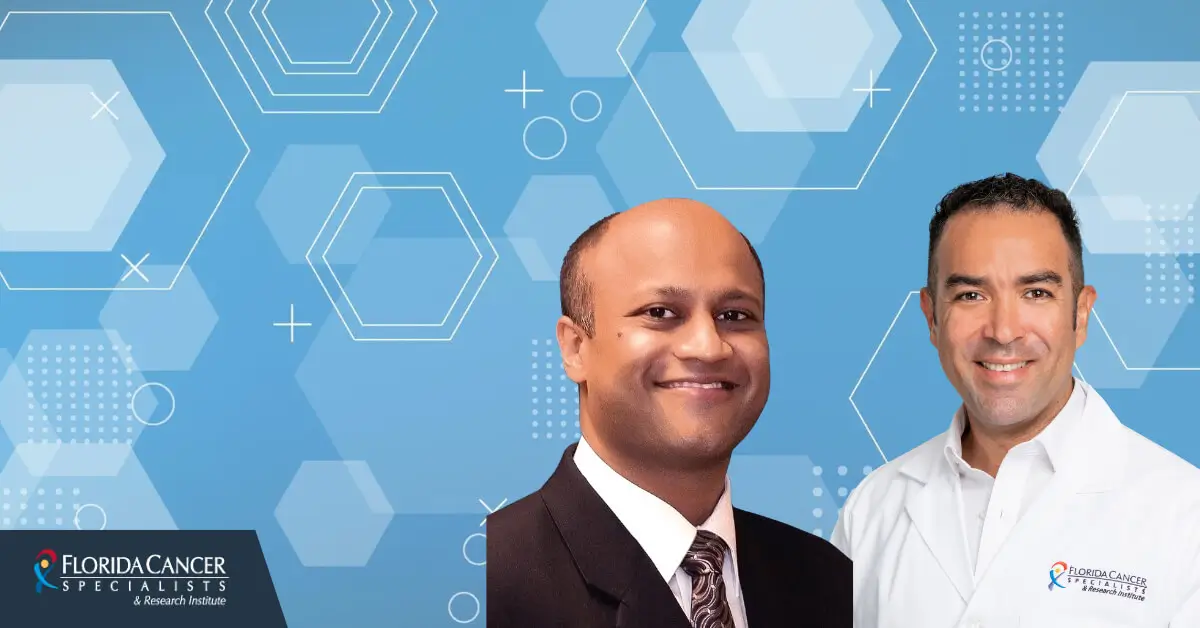
“By integrating scientific discovery into clinical practice, we are able to offer our patients more personalized, effective treatment options,” said David Wenk, MD, FCS assistant managing physician, “which aligns seamlessly with FCS patient-centered, science-driven mission.
The following FCS physician will present research results during an oral presentation:
- Ivor Percent, MD, co-author: Results from the randomized phase 2 study (1801 Part 3B) of elraglusib plus gemcitabine/nab-paclitaxel (GnP) versus GnP in previously untreated metastatic pancreatic ductal adenocarcinoma (mPDAC).
FCS medical oncologists and hematologists are also co-authors of three studies of advanced treatments:
- Fadi Kayali, MD, co-author: Results of a phase 2 study of a novel DLL4-VEGF, a bispecific antibody, tovecimig (CTX-009), as a monotherapy in patients with refractory metastatic colorectal cancer (COMPANION-003).
- Judy Wang, MD, FCS associate director of drug development, co-author: Efficacy and safety of ASP3082 monotherapy or in combination with mFOLFIRINOX in patients (pts) with pancreatic ductal adenocarcinoma (PDAC), and Phase 1 evaluation of ASP3082, a first-in-class selective protein degrader, in patients (pts) with KRAS G12D-mutant pancreatic ductal adenocarcinoma (PDAC): Pharmacokinetics (PK) and biomarker insights.
“Early-phase clinical research, including Phase 1 and Phase 2 studies, is essential for advancing cancer treatment. These trials provide patients with access to promising new therapies at the earliest stage and generate the critical safety and efficacy data that lead to breakthroughs in care.” said Manish Patel, MD, FCS medical director of drug development.
Gastrointestinal cancers affect the digestive tract organs, such as the stomach, large and small intestine, pancreas, colon, liver, rectum, anus and biliary system.